Showing posts with label Event Recap. Show all posts

Friday, October 5, 2012

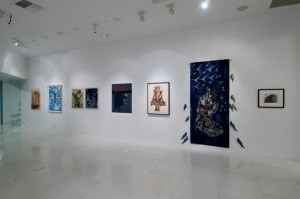
Opening night for LA Print Space at PDC

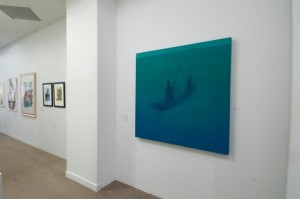
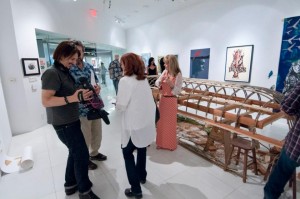
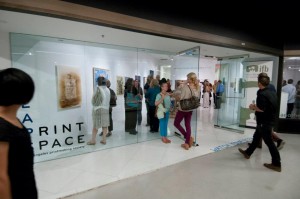
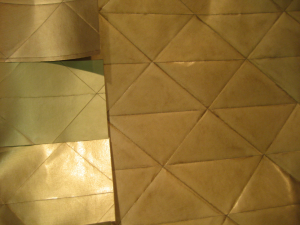
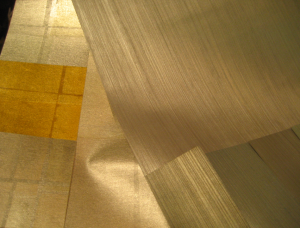
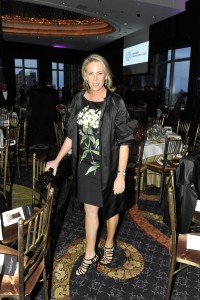
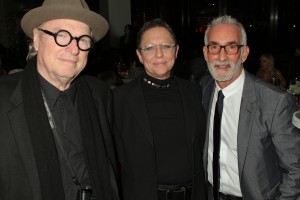
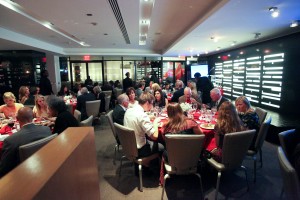
LA Print Space, a space dedicated to contemporary printmaking, made it's dashing debut at the PDC during Fall Market, on September 19. Curator, Cathy Weiss, could not have been happier with the turn-out.

The brand new gallery's first exhibit entitled, Sea of Exchange: Ireland – Los Angeles, was a hit! For complete details on the exhibition take a look back at our interview with Cathy, here.

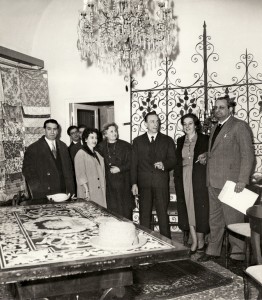
This just in! Photos from the opening night gallery reception:


The exhibit will run through November 1, for more information visit the website.

Thursday, October 4, 2012

Rubelli tells the story of silk

A new book, chronicling the life of the Rubelli family and the company's extraordinary textiles has hit the bookstores and is worth a celebration.


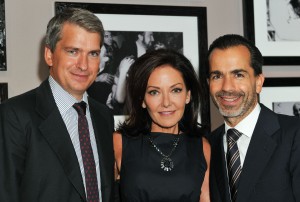
Last month at the DDB, Margaret Russell, Editor-in-Chief of Architectural Digest, joined Nicolo Favaretto Rubelli, CEO of Rubelli and Andrea Favaretto Rubelli, CEO of Donghia for a special presentation of the book.


“I’ll tell you a Venetian story spanning two centuries. Five generations, six brands, five continents: our history, yesterday, today and tomorrow.” - Alessandro Favaretto Rubelli

Rubelli: A Story of Silk in Venice, written by Irene Favaretto (sister of Alessandro), takes you through the history in photographs, archiving the company's work.


The book is on sale now, pick up your copy and indulge in the rich history.

About Rubelli Textiles:
Currently run by the fifth generation of the Rubelli family, the company produces and sells top end, high-quality furnishing fabrics - brocade, damask, velvet, silk and lampas.

Wednesday, October 3, 2012

Knoll Luxe & Trove's fabulous collaboration

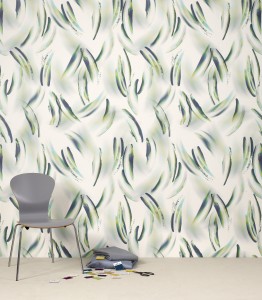
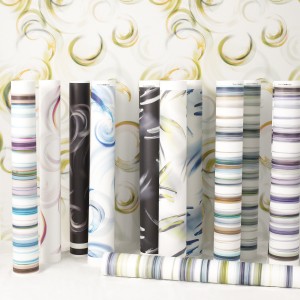
Trove announced their partnership with KnollTextiles back in June as their stunning wallcoverings entered the Knoll Luxe Showroom in the DDB. But last week, we checked out the official launch and reception for the Vivid Collection, and were nothing but impressed.


Trove designers Jee Levin and Randall Buck discussed their design process with attendees and spoke to how they made the prints come alive.


“Designers have been thrilled to see Trove in the D&D, love the use of color and feeling of whimsey in the collaboration they have done with KnollTextiles,” said Cannon Schuab, Knoll Luxe Showroom Manager.


Intrigued? Take a look back at the collection in detail in our previous post and stop by the showroom, Suite 1702, for a peek!

Monday, October 1, 2012

Designers chat about creativity and personality in the 21st century

Creative thoughts flourished at the Soho House last week as The Round Table Creative Media Group (Round Table CMG), in partnership with the DDB, presented Design in the 21st Century: A Creative Minds Salon, panel discussion.

The discussion featured industry leaders Alexis Bittar, Jewelry Designer for the likes of Lady Gaga and Michelle Obama, Winka Dubbeldam, Principal of Archi -Tectonics and Interior Designer Thom Filicia.

The panelists tackled questions including, what is design? How is the past important to the present? And how is the design world ever changing?

Here are some highlights from the talk:

According to Thom, design to him is very much about personal expression.

“I see design as a vehicle for us to really express ourselves,” he said. “For me that’s what design is today — bringing really great ideas and inspiring people at every level.”


Moderator and panelists

Winka described design as an extremely elaborate and personal process and she follows her own unique path when designing as an architect.

“I hate style, can’t stand style,” she said. “Just the idea that you have to be put in a box really irritates me.”

With regard to design in the 21st Century, the panelists agreed that it’s not really about the present and the future, but about the past.

“I’m really inspired by the past,” said Alexis. “You must tap into the past to make something modern.”

Although the world of design is ever changing in many aspects, according to Thom it’s mostly about re-inventing the old.

“I do think that there are fresh new interpretations of design but I don’t really see that there are too many brand new ideas,” he said.

The Creative Minds Salon series, put on by Round Table CMG, are meant to cultivate discussion about the latest industry trends, technology and creative ideas.

For more information on the Round Table CMG and the Creative Minds Salon series, visit their website.

Monday, July 30, 2012

Larry Laslo's "Artist's Eye" at Robert Allen

For their fourth Artisan collection, Larry Laslo and Robert Allen have tapped Laslo's passion for the handmade. Influences are instinctively artistic, ranging from painting to sculpture, and highly textural. Laslo presented the collection earlier this month at the DDB. Robert Allen Group’s senior vice president of design and marketing Jennie Wilde noted, “Larry’s artistic point of view brought a unique story to the table. His personal passion for the history and process of art lends an exceptional taste level to the collection, which, combined with Robert Allen’s focus on color, has created a chic and inspired new line.”

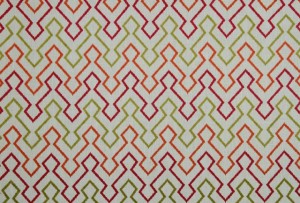
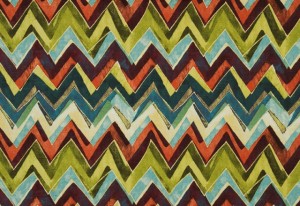
Artigiano is a geometric embroidery on linen with a subtle ikat effect, available in six colors:


“I want this collection to lend a dramatic, lush look to interiors with its intense colors and lavish textures,” remarked designer Larry Laslo. “Just as a great piece of art can make a room, so can the right choice of fabric, and the Artisan Collection is full of these statement makers. It’s jewelry for the home.”

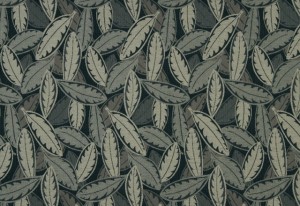
Color Field in Leaf:


Tapestry Floral in Midnight:


Velvet Maze in Aquamarine:


While the palette focuses on earth tones, accents include orange, fuchsia and teal. The collection is divided into two color stories -- Gemstone, which includes jewel tones and rich shades. and Quartz stone with natural colors drawn from minerals and pottery.

Monday, July 16, 2012

Rose Tarlow heads outdoors with Sutherland

On Wednesday, the David Sutherland showroom at the DDB held a mid-afternoon cocktail party (it's 5 o'clock somewhere!) to celebrate the latest introductions. Rose Tarlow Melrose House and David Sutherland, Inc. collaborated on two furniture collections and a full suite of high-performance textiles for the Perennials label. Jobst Blachy, the new CEO of Rose Tarlow Melrose House, just 8 days into the job, was on hand to toast the final results. We introduced you to him last week.

Sutherland and Tarlow have worked together for nearly 30 years. "Rose and I have always appreciated fine quality and design," David Sutherland, CEO of David Sutherland Inc. says, "Our collaboration reinforces our commitment to both of these elements and brings us together again after many years."

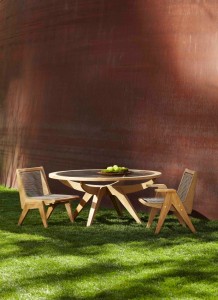
Cat's Cradle features state-of-the-art cording for serious comfort:


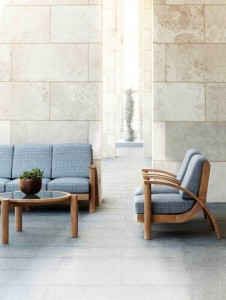
Both Cat's Cradle and Rising Moon are produced from sustainable teak.


The 70 fabrics, available in five colorways, are all made of 100% solution dyed acrylic, which makes them soil, mildew and UV resistant. Says Ann Sutherland, president of Perennials, "Rose adds a sophisticated collection of designs that enhances the Perennials offering. In color and style, this is a superb group of textiles."

The collections are now on the floor in all David Sutherland showrooms and at the RTMH flagship showrooms at the DDB and in L.A.

Tuesday, June 5, 2012

Get in bed with Hastens!

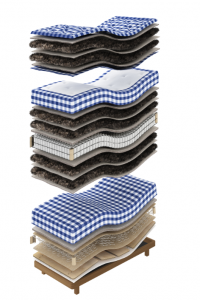
Lenoria, the newest addition to the Hastens mattress family, is the first all-natural adjustable bed designed by the Swedish family-owned company that can be controlled via Bluetooth technology. Known for their multiple layers of all-natural materials, including flax, wool and horsehair, the mattresses can last generations and are commonly passed down through families in Sweden.


Targeted towards a younger audience who increasingly spends more hours working and relaxing in bed, Lenoria features wallhugging technology that preserves the same space from the wall no matter what position you raise the bed to--thereby keeping bedside tables within reachable distance. While you'll have to visit a Hastens showroom (near the design centers in Houston and Beverly Hills, CA, as well as two in Manhattan) to discover the new Lenoria for yourself, you can stop by Lorin Marsh at the DDB to experience some of the classic Hastens comfort. If you missed the bed making event that Lorin Marsh hosted during Spring Market, here's a recap of it by Steven Kurutz for the New York Times!

Thursday, May 31, 2012

Iris Apfel discussion at Sotheby's

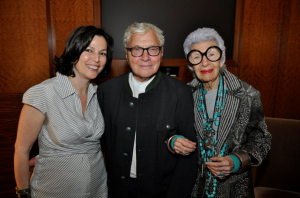
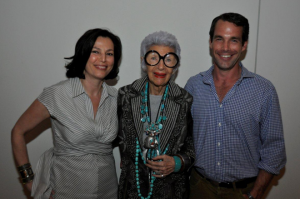
Last night Sotheby's hosted a conversation with Veranda editor-in-chief Dara Caponigro and style legend and Old World Weavers' founder Iris Apfel. "A Conversation About Style and Design" was part of the inaugural lecture series to benefit the Kips Bay Boys & Girls Club in partnership with Hearst Design Group. This year's show house, at the Aldyn on Riverside Boulevard, runs through June 14th. Two lectures remain in the series: tomorrow at 11am, Miles Redd will present "Fashion and Inspiration in Interior Design" and on Tuesday, June 5, Tom Savage will present "Addicted to Old Houses: Iconic Rooms and Influential Interiors." Click here for more information and to register. Cost is $75 each.


Caponigro, John Rosselli and Apfel

Apfel is a veteran storyteller and last night she was in fine form. She kicked off with a story from when she was eight years old and wanted to style a look based on ballerina Isabella Duncan, in anticipation of a visit to a photographer's studio. But there was no chiffon in the house, so "I improvised with cheesecloth! I looked like an amateur sculptor had worked me in clay, got bored and walked away, and I topped it off with a head full of corkscrew curls! I looked god-awful, but that was the first time I thought, 'What difference does it make as long as I like it."


Caponigro and Apfel with Christopher Spitzmiller

Another hit, "My father did a lot of mirror work and he was hired by Elsie de Wolff at a time when he was very busy with other projects, so he took her job on, under the condition that he could do the work on Sundays and bring me along. She spent Sundays in bed and she was always wearing a beautiful Sable bed jacket. I learned it was a Sears & Roebuck jacket she had brought to furrier Maximillian to copy. She would receive me in her 18th century French boudoir, and she always had her French poodle with her, whom I thought she had dipped in indigo. I never realized what an influence she had on me." On her book, Rare Bird of Fashion: The Irreverent Iris Apfel, a catalog of her idiosyncratic style, she said, "I feel like a great sponge, full of influences, and it was only in writing the book that I feel like someone just wrung me out."

All photographs by Annie Watt.

Friday, May 25, 2012

Color trends through the decades with Keith Recker

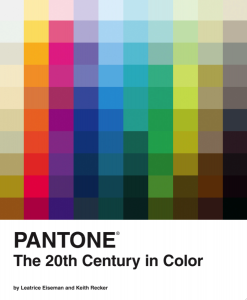
On Tuesday, as a part of the DDB Design File Series, Cowtan & Tout hosted a presentation by Keith Recker, International trend forecaster, editor and founder of HAND/EYE Magazine and coauthor of Pantone: The 20th Century in Color.


Keith Recker presented excerpts from his newly acclaimed monograph with an overview of the colors of 20th Century design. The informative, funny talk featured slides Recker pulled from his book, with a decade by decade exploration of color trends in fashion, interior and culture.

Here are some notable examples:

1950s: Classic American red, which was epitomized by Elizabeth Taylor, Marilyn Monroe and their iconic red lips. Here's an example of an interior, photographed by Horst P. Horst, which encouraged the use of cottons in interiors. The contrast to this was a love of pastels, which Recker tied to the technical revolution in color film, taking the medium from technicolor to a more subtle, fragile glamour, with examples of Audrey Hepburn and Grace Kelly. His suggestion: "Go to YouTube and type in Pretty in Pink and Funny Face for all of the color advice you need." Larsen's 1954 Spice Garden fabric captures the pastel influence:


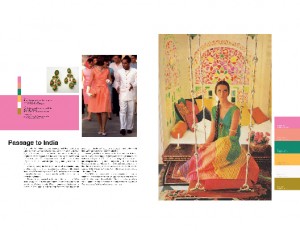
1960s: "Jackie Kennedy's 1962 state visit to India brought color consciousness to our American eyes."


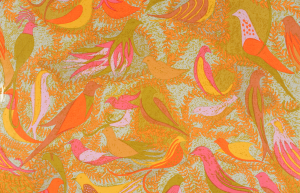
You can see the color inspiration in Larsen's Tapestry design (pictured below).


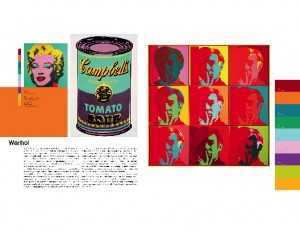
Likewise, Sheila Hick's Kerala captures the love of the pink and green combination. "Warhol was another influence, with his juxtapositions of blood red with softer lavenders."


And Larsen's Mid Summer velvet and the Landis upholstery seen on Braniff Airways seats shows how pervasive that palette was.

1970s: "Avocado green and burnt gold was everyone's favorite, spurred by the environmental movement and passage of Clean Water and Air acts in 1970. Open plan houses reflected our interest in the exterior world." Here's an example of a Larsen printed velvet from 1970.
"Simultaneous to this was an obsession with French Country (it was around the time that Pierre Deux was born), and it wound its way into the sensibility of Laura Ashley and Terence Conran's Habitat store.

1980s: Preppy! "Princess Diana epitomized this look, with countless outfits of hunter green and crimson. In the home world, look at Hutton Wilkinson's pavilion or Mario Buatta's chintz. There was also a love of mauve, the follow up to avocado. It was grounded and earthy, and seems to have come to the national attention with the traveling Georgia O'Keeffe retrospective which brought her Santa Fe colors around the country."

1990s: "Celadon followed mauve as the a la mode color. Martha Stewart's zen, restrained palette and aesthetic was juxtaposed with the growing popularity of gold and bling, as seen with Michael Jackson and Gianni Versace."
It was a fascinating look at how color trends might not be random after all. Ultimately it's hard to notice when you're in the moment (but we all know right now it's neon!) so pick up the book to delve deeper.

Wednesday, May 23, 2012

Anya Larkin discusses her wallpapers, inspiration

During DDB's Spring Market last week, Stark hosted a presentation by Anya Larkin, who spoke about the inspiration of her wallcoverings and the creative process. Larkin worked in film and fashion, including a decade with Mary McFadden. "I really loved being a part of the making process," she says. "While working with Mary I developed a line of textiles, when a client asked me to do wall coverings. I searched the DDB and I didn't find anything that I would want in my own home. It all felt too commercial. So I went to the art stores, and I played around with rice paper and different textures, and then I learned how to back it." Her line of wallcoverings, all handmade by her team of artisans, is represented at Stark. Here's a recap of what she shared with the audience of bloggers and designers.

"I always go to the Metropolitan Museum of Art for design inspiration. Just to be in the temple of art and to feel the great artists and be inspired. I look at ceramic glazes, Japanese armor. Not to copy but to plant the seed of inspiration. My prints are all classically derived. A fleur de lis has been drawn thousands of times, so why do I need to try to reinvent it? I'll change the color, scale, but always start from a classical point. A non-print starts with an inspiration from a glaze, for its colors or textures. I contemporize something that was centuries old and I try to make it refreshed. I never learned how to make a repeat in art school, so I hand draw it all, which might be crazy, but it makes for patterns that reveal subtle differences.


This design [pictured below] was inspired by an origami box we did for a client gift, which when I disassembled it, was so beautiful.


We have a factory in Long Island City, we just moved from 28th Street. Quality and craftsmanship are critical to me: I hire textile people, who are used to doing the same thing over and over again. Artists want to do everything different each time. Everyone with me has assisted for at least a year before doing any sort of production. We examine everything personally before it goes out. I don't want my name attached to anything that isn't done right.


On Color: In the 70s and 80s I was with Mary McFadden when she was doing brights. I had to work to refine my palette, but at first I couldn't seen the subtleties. I looked at white for a while. I'm interested in colors that flip between two colors--greens-blues-greys. I use full spectrum colors (yellow, red, green) to make my beiges. Once we spent two weeks making a beige. I don't like clear bright colors. We have big windows with north light. Sometimes in the winter we go out onto the street to look at colors. Size and scale is incredibly important. The negative space is as important as the positive space. Many different techniques are involved, many with multiple techniques per final product."

Tuesday, May 22, 2012

Child's Play with Lulu DK at Schumacher

In case you missed the panel discussion at Schumacher last week during DDB Spring Market, we wanted to share this excellent report by Nicole Abbott of Chic & Cheap Nursery. Nicole was one of the bloggers on site throughout the day, catching up on all the building has to offer, including a number of parties!


Carolyn Sollis, a contributor to Editor At Large, moderated the panel discussion on "Designing for a Sophisticated Child" with designer (and mother of three boys) Lulu de Kwiatkowski and Susan North, Schumacher's SVP of Design and Creative Director. Click here to see Nicole's full report on the discussion.

Monday, May 21, 2012

Moss on the intersection of art and design at Fortuny

Last week, during the DDB's Spring Market, Fortuny hosted a conversation between design aficionado Murray Moss and his friend Susan de Menil, of the notable Houston family, on the subject of art and design. Here's a run-though of the fascination discussion you missed.


Moss: Is decor the glue that hold it all together? Each is segregated—art in galleries and museums, design at showrooms—but we experience it all in a residential context. Most of us live with those subjects fused -- that's the terrain of decorators. Mariano Fortuny was at the intersection of art and designer (painter, photographer, sculptor, architect) -- a true renaissance man. He designed furniture, created one of the first dimmer switches, he was a fashion designer (Delphos gown), and created both functional and non-functional objects. He broke down the guild system, not defining what he was going to be as a single-track career.

deMenil: My background is architecture. Art is something you live with, a relationship that exists in two directions. My mother was a decorator and she taught me how to look at rooms and how they can exist, how you can live with art. I've always considered decorating as a conversation between art and objects.

Moss: Nurturing of the juxtaposition between art and design. It's what I did in my store. At most institutions, like the Metropolitan Museum of Art and MoMA, art and design are separate departments. The Frick will put a chair in front of a painting, but that isn't common practice. Susan's mother-in-law, Dominique de Menil and her husband John commission Philip Johnson in 1948 to build the first International style modern house in Houston. It was his second project after his legendary Glass House.

de Menil: John and Dominique knew the artist/sculptor Mary Calgary, who was a friend of Picasso. They asked Mary who they should work with on their home, and she replied, "For $100,000 you can get Mies; for $75,000, you can get Johnson". Turned down most prominent architect at the time, in a city that was still doing FLW modern, was surprising. But John & Dominique didn't like Philip's furniture suggestions, so he wasn't involved in the interiors. Instead they brought on Charles James, a dress designer, who had done showrooms.

Moss: Bringing in another discipline. He was a sculptor. I used to be in fashion and I'm a big fan of Charles James. Early modernist work of art, in a fairly small home. For a family with a sensibility of art, as inspiration, as something to be used. But "how are we going to live with these things." I just love that Dominique turned to her couturier.
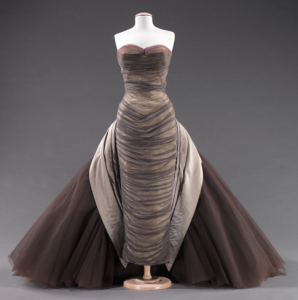
[A Charles James Butterfly dress, image courtesy Brooklyn Museum]

de Menil: Johnson never published the house, because he felt James destroyed his temple to international modernism.The de Menils bought a lot in River Oaks. They wanted the front entrance to be the back entrance. They were very involved in civil rights. The house became an early statement on the treatment of others.
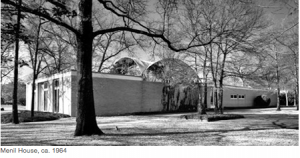


Moss: It positioned Johnson's architecture as a political statement.

Susan: Johnson once told me that Dominique was his greatest client. He felt they introduced him to Houston, where he went on to design the Penzoil building and St Basil's Chapel. They were French, they were living in Houston and they had a family.


[Image courtesy barranca.]
Moss: When I walked in, I said "where's the James"? I was expecting it to look like a dress. It wasn't noticeable to me at first. It seemed like there was bad furniture. A "frugal" approach almost, a diminished approach.

de Menil: James did a dining room banquette, and a living room banquette and chaise, and he selected textiles and colors, and went shopping with them for things they didn't bring from Paris. Primarily, he introduced a palette and textiles, like the greys that they became famous for. The coloring was very subtle, almost European, that wasn't considered modernist at the time.

Moss: And there were five kids in this home. And when you took me to see it, I felt like the home was a loving gesture. I could almost hear Dominique asking Charles "give me a hand with this. Do what your do with dresses in this home." I could see love, tell that it was done by someone intimate with the family, who almost did a favor, like he wasn't wanting to offend Johnson. The Cupboards were painted on the interiors. The kids bedroom doors are covered with velvet and felt, there's a velvet curtain leading to the bathroom instead of a door. Gestures that weren't integrated into the architecture. The architecture and the interiors were kept disparate-- you can tell what's the James and what's the Johnson.

de Menil: I'm sure they were tough clients. They certainly knew what they wanted. But there was an impulse that was informed by what they knew, and they didn't care what the "canon" said, they refused to have the Barcelona chairs. They wanted to make Houston more cosmopolitan and they did it in their home.
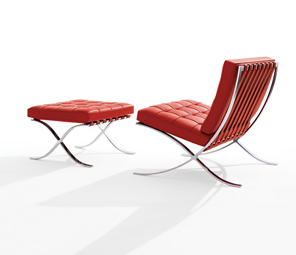

[Mies van der Rohe's Barcelona chair, image courtesy of Knoll.]
Moss: James wasn't creating a holistic environment. It wasn't a montage, a layering or overlaid. This is two distinct realms. Is it possible to have a good decor without art? Susan lives with great art. And tell them about your daughter's 16th birthday party. They made a decision to remove art from some of the rooms.

de Menil: The harsh reality of having 60 16 year-olds in your home. My husband was the architect of the house, and we removed the art from the first two floors. We left the furniture and the rug, and there was just a piano and picture hooks.

Moss: And it really looked fabulous. The architecture, the colors, the light, proportions are artful elements and they held their own, but when the art was up, because it's so good, it absorbed you, not letting you get to the architecture. When you take out the most important things, you can see the rest of the underlying layers. The house I grew up in was a suburban Chicago dream house. But my parents were industrialists--my dad wanted a drinking fountain in the dining room, and hand-driers in the bathroom. Robert Mellon was our decorator, and he had the opposite job of de Menil. He made a kumquat garden in the dining room for our petal drinking fountain. My mother wanted the pink bathroom, green bathroom, so Mellon enameled the hand driers! The point is there are disparate situations when it comes to decor. And different opinions and personalities involved. I was at a house in the Hampton and there was this enormous tree, and the architect said it had to be cut, because it was covering too much of the house. Are we meant to live with art, and when we do, does it have to become functional?

de Menil: You don't have to have great art, but you need to know how to present it in the room, how you install it.

Moss: I think decor is an art, one which isn't institutionally supported. There's no sanctioned model. It's almost impolite to talk about, but yet it's critical. There's an inherent juxtaposition of functional and non-functional, and yet one needs to come first. Decor is about gluing it all together. Art can be experienced on its own, but it can't service you in how you want to live. Is decor always about personal expression or status? It's a complicated question. Each piece works together but doesn't lose its integrity with its relation to what surrounds it.

Moss: There's no rule that you have to live with balance. It's ok to say "I don't care." And invest and show off what you care about. A Rietveld zigzag chair isn't merely a functional object. But at the end of the day, art and design are seen together in a home. But they can be mutually beneficial. Wouldn't a Rothko benefit from being seen with equally "valuable" furnishings.

de Menil: God is in the details.



Moss: There are things that a painting can't do. You can't drink out of a painting. There's a physical interaction with design. I love very fragile glass [like Lobmeyr, pictured above, available through Moss]- $200 a piece- and you have an altered behavior when you use it because it's delicate. It's experiential. That's incredible value for $200.

Thursday, May 3, 2012

Celebrating the Kips Bay Decorate Show House

The 40th anniversary of the Kips Bay Decorator Show House kicked off on Monday night with the President's Dinner at the Mandarin Oriental. Nearly 500 guests filled the ballroom, including: Margaret Russell, John McEnroe, Dennis Basso, Lauren Dupont, Bunny Williams, Jeremiah Goodman, Charlotte Moss, Doug Wilson, Thom Filicia, Bettina Zilkha, Peter & Jamee Gregory, Valentin & Yaz Hernandez, as well as gala co-chairs Jamie Drake, Aerin Lauder, Victoria Hagan and Richard Mishaan. The evening was sponsored by Architectural Digest.

Jim Druckman, Bunny Williams, Jamie Drake, Aerin Lauder, Richard Mishaan


Charlotte Moss


Richard Mishaan and Margaret Russell


For the first time, this year's showhouse, chaired by Bunny Williams, will be in a luxury high-rise on the west side, the Aldyn on Riverside Boulevard between 62nd and 63rd Streets. The space measures 11,488 interior square feet and 7,480 exterior square feet and will present the work of thirty-two designers, including some of our favorites:
Alexander Doherty Design; Andrew Tedesco Studios Inc.; Brian del Toro Inc.; Brian J. McCarthy Inc.; Bryant Keller; Bunny Williams Inc.; Charles Pavarini III Design; Charlotte Moss, LLC;
 Chuck Fischer Studio, Inc.; Coffinier Ku Design; David Kleinberg Design Associates; David Scott Interiors; Gunn Landscape Architecture and Vert Gardens; James Rixner Inc; Jamie Drake/ Drake Design Associates; Laura Bohn Design Associates; Lynne Scalo Design; Mark Hampton LLC; Monica Rich Kosann Photography; Neal Beckstedt Studio; Patrik Lonn Design Inc.; Raji Radhakrishnan/ Raji RM & Associates; Robert Schwartz and Karen Williams for St Charles; Scott Sanders LLC; Shawn Henderson Interior Design; Susan Zises Green, Inc.; Thom Filicia Inc.; Timothy & Associates Interior Design; Todd Alexander Romano; Zoya Bograd of Rooms by Zoya B.

Victoria Hagan


The show house will be open to the public May 16-June 14, seven days a week. Over four decades, the show houses have raised more than $17 for the Kips Bay Boys & Girls Club.


All photographs by Patrick McMullan.

Wednesday, April 4, 2012

WESTWEEK Recap - Stars of Design Awards

A perennial highlight of the Pacific Design Center's WESTWEEK is Stars of Design, which this year included the addition of Stars on the Rise. Established over a decade ago at the PDC, the Stars of Design Awards recognize the contributions and achievements of professionals in various fields of design. Stars on the Rise calls attention to new talent and identifies them as ones to watch in the future. The evening was hosted by Charles Cohen, who presented the awards on behalf of the PDC and himself.


This year's honorees were:

Stars of Design:


Luc Leestemaker ART


Regina Rubino
GRAPHIC DESIGN


Roger Davies
PHOTOGRAPHY


Molly Wood
URBAN DESIGN


Donna Livingston
INTERIOR DESIGN


Neil M. Denari
ARCHITECTURE


Waldo Fernandez
LIFETIME ACHIEVEMENT

Stars on the Rise:


Natasha Baradaran


Tracie Butler


Alexandra von Furstenberg


Wolfgang Puck's Red 7 was the venue for the by-invitation-only dinner for seventy attendees, who enjoyed a three-course dinner of salad, chicken and mushroom risotto and a Meyer lemon tart. A private viewing of "The Total Look: The Creative Collaboration Between Rudi Gernreich, Peggy Moffitt and William Claxton" at the MOCA Pacific Design Center served as the icing on the cake.


von Furstenberg and Fernandez


Livingston and Marc Appleton


John van Hamersveld, Alida Post and Fernandez


Butler and Jason Hoehn


Dinner at Red 7


To see more images from the night, check out the PDC on Facebook.


Tuesday, March 27, 2012

Event Recap: DDB Design Files Features Outdoor Design Stars

Yesterday New York Spaces hosted a seminar at Walters Wicker, DDB Suite 538, with design experts John Danzer, the "exterior designer" and founder of Munder-Skiles; Philip Roche, Principal of Plant Specialists; Scott Bodenner designer of Chella Textiles; and Kevin Woodard of B&B Italia Outdoor.
The group combined its distinct backgrounds and expertise to a dynamic discussion on luxury outdoor living. From urban terraces and rooftop gardens, to country estates and beach homes, 50 guests learned about inspiration and the design process, overcoming environmental challenges, new trends and technologies in product development, and how to transition a space from the indoors out.
The discussion was moderated by Kelly Buschbaum, Home Furnishings Manager of NY Spaces, and was followed by a lively lunch reception.

Monday, March 26, 2012

Event Recap: Methods, Materials & Mechanics of Carpeting Today, with Stark

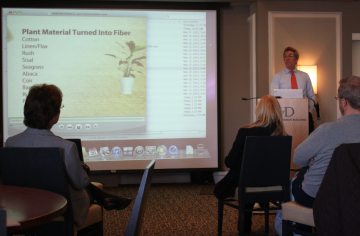
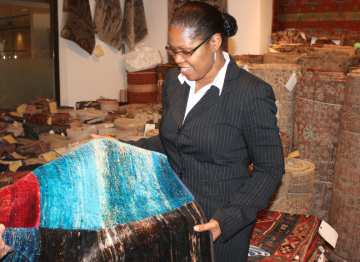
Last week's CEU Series course with the New York School of Interior Design was designed to help attendees learn the ins and outs of today's carpeting, from the methods and materials that go into the making of carpets to the mechanics of treatment and preservation.


Led by instructor Tim Sheridan of Stark Carpet, the course explored traditional and contemporary carpeting options to source and use in today’s ever-changing marketplace. Audience members wished the lecture wouldn't end!


"I really enjoyed hearing what Tim had to say and was sad to realize the hour had already passed when it had," said a CEU attendee. "I found it so fascinating to learn about the recycled materials now being used in the creation of carpets and how 'green' the practices can be."


Tim explored the many materials that now go into the making of carpets, showing the audience plant materials that are turned into fiber and used in the making of carpets.


"There are an unlimited number of plant materials that are being turned into fiber today and have been for many years," said Tim. "Among these, flax, rush, sisal, sea grass, and Arabica are just a few. Because of the unlimited number of materials and means of construction, your design options are enormous and all the more enjoyable!"


Check back with GoDesignGo for the next CEU Series at the DDB to catch more from the experts.

Wednesday, March 7, 2012

Event Recap: Sutherland & AD Present 'The Furniture of John Dickinson'

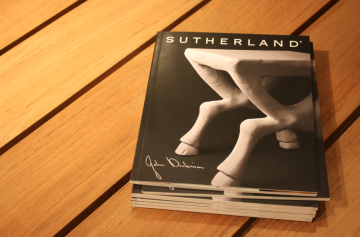
We recently attended David Sutherland's presentation The Furniture of John Dickinson, hosted with Architectural Digest at the Sutherland showroom at the DDB. The evening event included flutes of champagne and hors d'oeuvres—and of course, the guest of the affair: fabulous Sutherland interpretations of John Dickinson's furniture.


Guests crowded around the limited series of estate-authorized furnishings cast from the creator's original works and molds before browsing through Sutherland's newly expanded showroom.


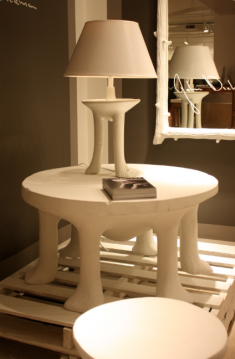
"David Sutherland has been working with the estate to bring back to life John Dickinson's work," said Debbie Burgos, Sutherland sales associate. "The pieces are made from reinforced concrete glass, so they're truly outdoor pieces."


Debbie, along with sales associate Katie Woodall, told us that designers and clients have had nothing but good things to say about the collection, and a lot of good things at that.


"People absolutely love the collection!" said Debbie. "There are so many followers of John Dickinson, and now that his work has been combined with Sutherland's, the positive response is nearly overwhelming."


Debbie and Katie agreed that Sutherland's re-creations of John Dickinson's Africa tables are their favorite piece, and we can't argue. Stop by the Sutherland showroom at the DDB in Suite 813 and pick out your favorite.

Tuesday, March 6, 2012

Event Recap: Gracie Shares History at Student Design Day

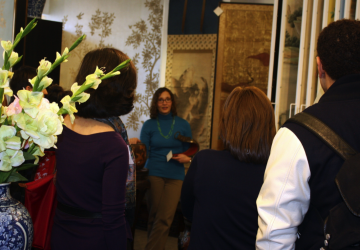
The DDB's Student Design Day-goers were all ears at Gracie Studio's presentation on the company's history, not to mention a lesson on Chinese and Japanese antiques and hand-painted scenic wallpapers. Jennifer Gracie and Mike Gracie, co-owners of the family-owned company, walked students through the past to what their family has spent decades selling.


Mike Gacie, principal of the fourth-generation, family-owned Gracie Studio, shared the story behind the brand and gave students a first-hand view on the finest hand-crafted works in décor.


"The turnout here on Student Day was huge, and it's great to know how impressive the future of design is," said Mike. "Jen gave an in-depth overview of Japanese and Chinese antiques, and the response was excellent. Students asked great questions and really kept the conversation going with their curiosity."


"It's always wonderful to spend time with students who are pursuing the industry that you're in," said Jen. "I had a lot of fun giving the presentation to them and sharing Gracie's story with new visitors in the showroom who may soon be avid clients!"


Stay tuned for more on Gracie's newly designed website that we can't wait to share.