Showing posts with label A. Rudin. Show all posts

Monday, August 13, 2012

A visit to the PDC with Michelle Workman

We've admired Michelle Workman's talent from the pages of magazines, including her published designed for John Travolta & Kelly Preston, Kirstie Alley and Leah Remini. The L.A.-native also has an office in San Francisco, and describes herself as an "easygoing perfectionist." Known mixing contemporary and vintage styles, she can parlay French with Federal. As with many of her peers, she relishes "the hunt". We asked her to bring us along on one of her frequent pilgrimages to the PDC as she shops for a new client seeking a "Hollywood Glam" look.

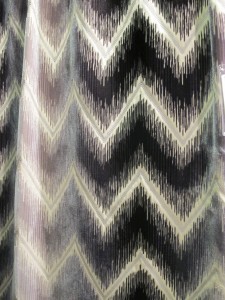
F. Schumacher's Shockwave, pictured on the Copenhagen sofa, adds subtle shimmer:


Somehow the F. Schumacher velvet (54860 in Platinum and Jet) doesn't seem too flashy.


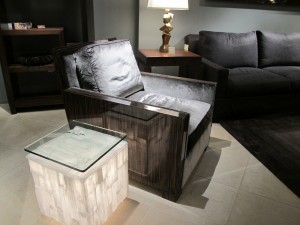
I think a little Art Deco will go a long way in this home. I stopped into A. Rudin and found these gorgeous chairs:


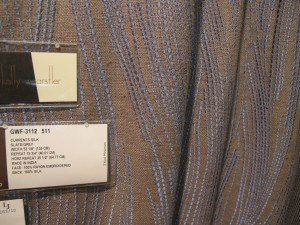
I'll upholster them in this great sort-of neutral silk from Kelly Wearstler for Lee Jofa:


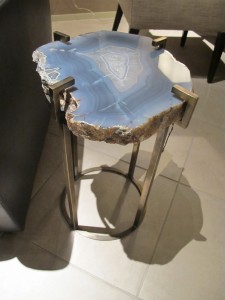
And then I swoon over this side table from A. Rudin, I love pairing modern design with organic elements -- it's a combination that adds up to CHIC!


Check back this afternoon to see how she'll finish off the room!

Friday, October 21, 2011

Guest Blogger: Harry Daniell Amidst A. Rudin's Newest and Best (Part 3)

Now that we have heard about the old, Harry Daniell, of Harry Daniell Design, is telling us all about the new during his recent trip to the DDB. Harry indulges us with an afternoon at the A. Rudin showroom, showing us the best of the old and new.


By Harry Daniell


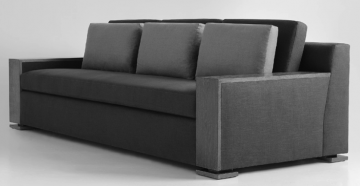
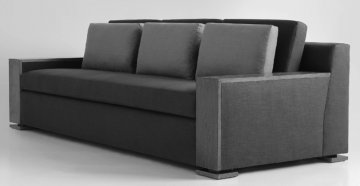
Enter something new! A. Rudin recently launched the R2727 sofa and I'm in love! Clean lines are also introduced and the depth created through the multiple levels of neatly arranged and sized cushions are standard throughout the piece.  The back of the sofa frame is one size and the cushions’ are contrasted at different scales providing a breath of fresh air.


If any one element was incorporated on its own one might think of “The Three Bears”.. The back is too low, the first set of cushions is too large, and the outer cushions are JUST RIGHT. However, when all three elements are incorporated together, they work beautifully.


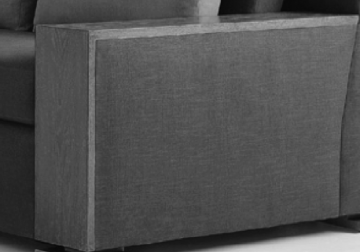
Another striking element that is fairly unique to this piece, especially after one wanders the D&D Building, are the arms, which are crafted on the top and front surfaces in a wood finish. I've never seen anything similar to it! The sides of the arms are layered in fabric, making the arms a unique element. With all product at A. Rudin customizable, the design elements of this sofa offer the ability to create a one-of-a-kind look.


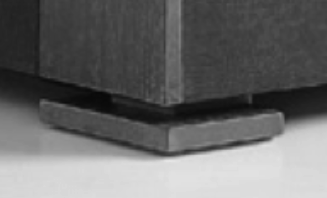
To round out the unique qualities of the sofa, the squared feet are simple and extremely interesting. They finish the piece's squared-off feel, perfectly mirroring all aspects of the sofa, including the squared off pillows, the sharp right angles of the arms and the clean lines of the front of the sofa. Something old and something new... what’s not to love!


Next week, Harry will conclude his afternoon at A. Rudin with what he loved most in the newest pieces from A. Rudin's Hellman Chang collection.

Thursday, October 20, 2011

Guest Blogger: Harry Daniell Amidst A. Rudin's Newest and Best (Part 2 of 3)

Yesterday, Harry Daniell, of Harry Daniell Design, got us better acquainted with the newest and best design of Debra Weninger.  Now Harry shares a little of something old and a little of something new from A. Rudin.


By Harry Daniell


To keep a room free from a design aesthetic, designers often combine something old with something new, something colorful with something muted, or something modern with an antique. In this particular case, its style is the same, but the age reference is in the context of when A. Rudin released the two newest pieces featured in its current showroom collections.


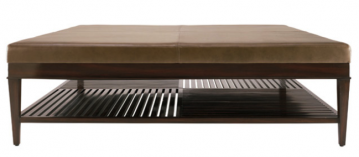
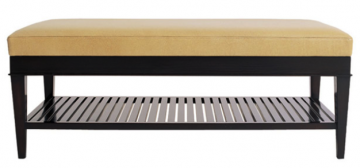
So despite Fall Market recently upon us, I couldn’t hold back on bringing the A. Rudin bench, item R652, into the picture, to juxtapose the newly launched A. Rudin sofa, R2727. Why something old?  For one, this piece can be transformed from a bench to a cocktail table and vice versa. It is not uncommon for a client to indicate that they don’t have enough seating, or need more table surface space when entertaining. This piece is multi-functional to accommodate both needs.


The design is true to form for A. Rudin with its very clean lines that have interesting elements. The shelf underneath the bench even offers an Asian flair with checkered pattern, giving it great, subtle personality. When styling a client’s apartment at the end of the project, I envision a myriad of books reflective of the client’s taste or large colorful bowls intentionally arranged. It's simply a must to consider when sourcing benches, cocktail tables, or both!


Stay tuned to GoDesignGo tomorrow when Harry shares with us something new at A. Rudin to juxtapose his favorite 'old' bench.

Wednesday, October 19, 2011

Guest Blogger: Harry Daniell Amidst A. Rudin's Newest and Best (Part 1 of 3)

We recently introduced you to Harry Daniell, of Harry Daniell Design. He's our newest Guest Blogger and after doing his rounds at the DDB, Harry is reporting back to us on what he loved this Market.


By Harry Daniell


It seems only too fitting that my first contribution focus on a product line that is brand new to the Design and Decoration Building! Enter designer Debra Weninger for the A. Rudin showroom. I didn’t seek Debra out; rather, her brilliant designs caught my eye and drew my design interest and writing hand towards them. Having made my way though the A. Rudin showroom, my initial question to the showroom manager was, “Who designed this amazing collection?”


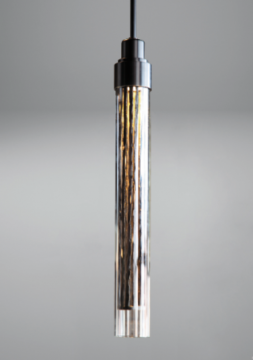
Initially, it was the pendant lighting that caught my attention: minimal and sleek yet truly a conversation piece. The Duneland Pendant was brilliantly created by the former Holly Hunt Design Director with the inner cylinder carved by hand by Debra herself and then cast in bronze. What creates further interest is the glass outer cylinder, which encapsulates the inner bronze design. The pendants are brilliant for over a dining table, hanging chicly in a foyer or suspended from the ceiling over bedside tables on either side of the bed.


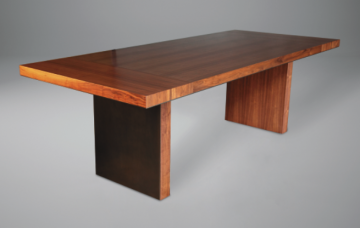
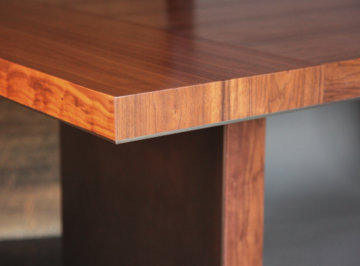
Now that your attention is captured, as mine was, I segue to the Marquette Dining table, which has an overall modern aesthetic with its 90-degree angles on the corners and where the base meets the tabletop. What creates interest is the graining of the wood, which differs at the head and the foot of the table. All are in the same finish, but the one-piece tabletop is seamlessly crafted with graining running perpendicular to a guest at any one of the place settings at the table. As a tabletop designer myself, this is a greatly appreciated feature! With the top being crafted in walnut, the juxtaposition of the apron and leg accents made of a bronze patina-finished metal create a warmth as one sets his or her gaze on the table.


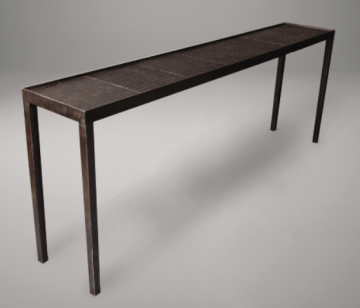
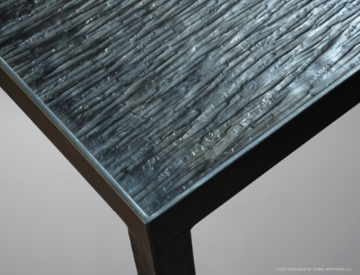
The metal and wood dining table is also cleverly complimented in the A. Rudin showroom by one of Debra's console tables. The hand-textured metal on the tabletop is so interesting AND warm. One typically thinks industrial when he or she thinks of metal, but this piece is anything but.


An additional component layered into the vignette found in the A. Rudin showroom, is the Eight-First dining chair. What better way to create a complete dining set than to add a chair with curved legs? Let’s face it, when something is too austere, it can read boring; this chair makes the austere legs of the dining table pop, while creating an interesting “at home feel” with the chair. When one leaves in the vignette in the A. Rudin showroom, he or she will think about the latest designer to enter New York: Deborah Weninger, along with her designs.


Get yourself over to A. Rudin to see more of Debra's work and stay tuned to GoDesignGo for more from Harry who tells us about something old and something new in the A. Rudin showroom tomorrow.

Friday, August 19, 2011

Meet the Designer: Thomas Fuchs' Ode to Otium (Part 2 of 3)

New York-based owner of Otium and designer, Thomas Fuchs, spent some time with us to talk about his signature collection, Otium. We know from our last post that 'Otium' is Latin for “aristocratic leisure," so we felt perfectly comfortable kicking our feet back as we posed questions to him about his work. We hope you’ll do the same as you read our Q&A below.


GDG: What helped to progress your skills in the industry?

TF: I started my professional training in a museum surrounded by the very best examples of art in a city where the museums were all free and their archives were there for even a curious student. This taught me to appreciate the finest of the fine.


I moved on to working in the auction business where I quickly became a furniture expert at the age of 25. This taught me period characteristics and social significance of design, which has always been influenced by culture, trade, and politic and technical advances.


After this, I moved to create my first collection of furniture called Quatrain, where I honed my knowledge of craftsmanship, business savvy and the importance of the relationship and mutual respect with the artisans that create the visions I have.


GDG: Did you have any major influences along the way?

TF: My two biggest influences were my parents who encouraged my art and my elementary art school teacher with whom I am still friends!


GDG: Can you tell us a fun fact about yourself?

TF: Well, I am not big on collecting. After working in the auction business and being constantly surrounded by so much stuff it is easy not to get emotionally attached. I am also willing to wait until I can get the very best example of something other then just filling in space.


The one thing I do admit to collecting is Han Dynasty and Neolithic pottery. I do not have a lot but what I have is important. I never feel like I am the sole owner, I feel like I am holding these for the next owner. You cannot help but feeling that a 2,000 year old object is now solely for you. I also “collect” or adopt stray dogs!


Next week, Thomas tells us what he's been busy with recently and which DDB showroom will carry his latest work. Find Otium at the DDB in the Holland & Sherry showroom, at the PDC in A. Rudin and at the DCOTA at J. Batchelor.


Thursday, August 18, 2011

Meet the Designer: Thomas Fuchs' Ode to Otium (Part 1 of 3)

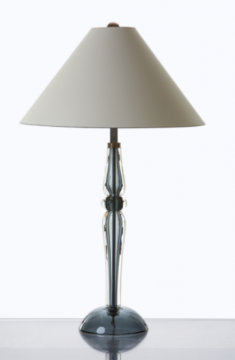
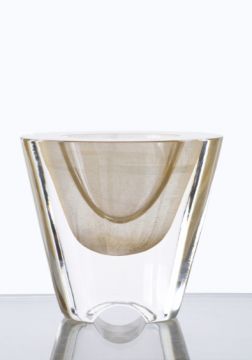
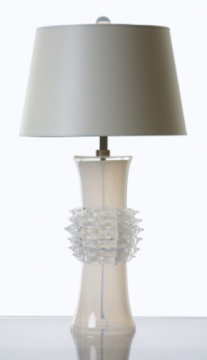
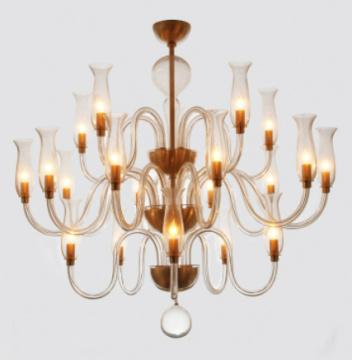
We recently had the chance to chat with Thomas Fuchs, New York-based owner of Otium and designer, about his signature collection, Otium. Tapping his classical training in the fine arts and his love of furniture and design, Thomas created a line of neo-classical glass lamps, cases and candlesticks for Otium Collection.


GDG: What does 'Otium' mean?

TF: Otium in Latin means 'aristocratic leisure.'


GDG: What was the inspiration or direction behind Otium?

TF: The clearest direction for Otium was to work with the Maestro of Murano, Italy. Although glass is made all over the world, I have yet to see the finesse that comes from the Maestro of Italy. The tradition in 600 years of glass blowing has only been altered by the addition of electricity—otherwise the pieces we create today are produced with the same technical attributes of the same pieces being made in the 17th century.


Glass is magic and being in the furnaces working is even more magical. To have these amazing Maestro willing to put up with this crazy guy from the United States is a gift for which I will be forever grateful.


GDG: How did you get started in the fine arts world?

TF: I have studied art my entire life. I have a degree in Art History and Studio and I went to the Corcoran School of Art in Washington, DC.  I am a member and student of the Art Student League of New York and I have also studied at the Academy of Art & Design, NYC. My last job before starting Otium eight years ago was to be the design director of furniture & decorative art for Donghia.


Check back with GoDesignGo for more about Thomas and his Otium Collection, but in the meantime, you can find Otium at the DDB in the Holland & Sherry showroom, at the PDC in A. Rudin and at the DCOTA at J. Batchelor.
Friday, May 13, 2011

Where in the DDB?

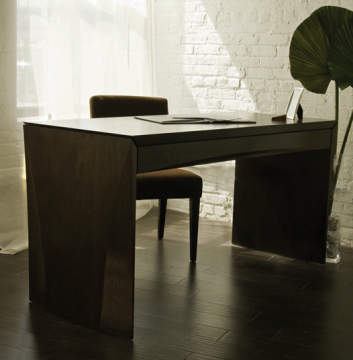
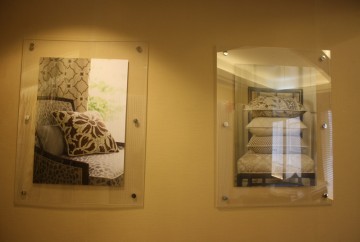
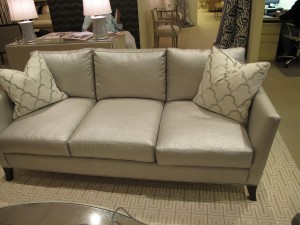
Think you can guess which DDB showroom we snapped these two photographs in? Leave us a comment with your guess to show us how well you know the DDB. The answer will be in next week's "Where in the DDB?" post.


Hint: This Company offers five distinct brands of the world's finest home furnishings textiles, including Colefax And Fowler, Cowtan & Tout, Jane Churchill, Larsen and Manuel Canovas.


If you guessed the A. Rudin showroom for last week's "Where in the DDB?" post, you're right!